
When a Spine Fracture Suddenly Changes Daily Life
Usually, patients do not present thinking that they broke their spine. They present as the pain is not going away, or as simple movements started to be hard. Perhaps because of a fall. Perhaps because of nothing. Just because they woke up hurting.
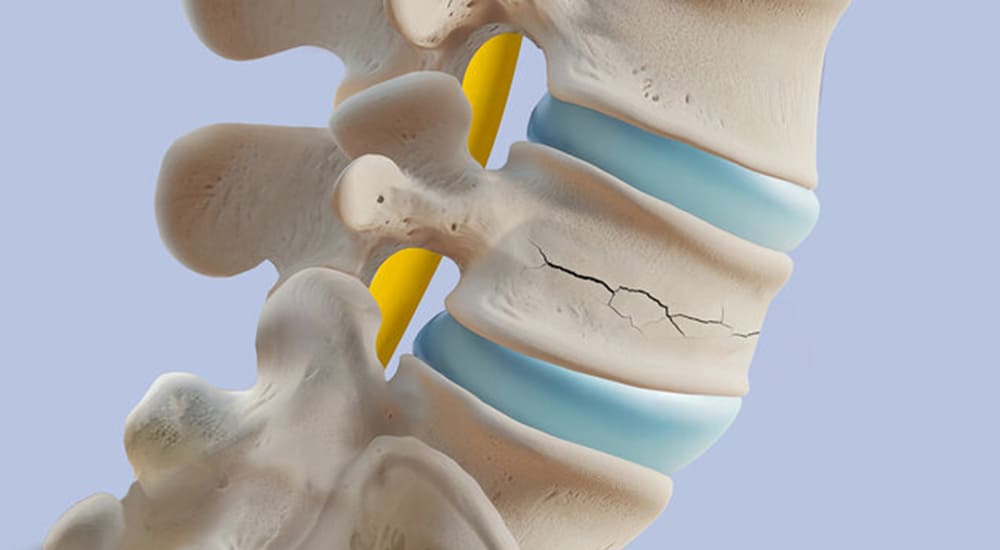
A bone fracture in the spine can be quite alarming, particularly because of the pain that may prevent one from walking, sitting, or sleeping. The first step in handling a spine fracture would be to understand what has happened exactly. Not all fractures are the same, nor do all of them require immediate treatment.
Why Spine Fractures Happen More Easily in Weak Bones
In young individuals, fractures are usually a result of accidents. In older patients, fractures have a more complex background. The bones become weak with age, and the spine turns out to be brittle without any prior symptoms.
While osteoporosis reduces the strength of the bones from the inside, ordinary functions like bending, prolonged standing, or even coughing can easily occasion a fracture. Most patients are not educated about osteoporosis until the occurrence of the first fracture.
How Doctors Decide the Right Line of Treatment
Treatment does not depend solely on a diagnosis based on X-rays. The intensity of pain, change in posture, nerve damage symptoms, and patient activities also influence treatment. In certain cases of bone fractures, patient observation may suffice.
In some cases, the pain will remain or the spine will start to lose its normal shape. In this scenario, though, there may be further procedures that are needed for the stabilization of the broken bone. It is always important that bone health be addressed in the matter of a fracture.
Procedures Used to Support the Fractured Spine
Some fractures of the spine may be treated with minimally invasive surgery. This type of surgery is not typically performed on all patients with such fractures but on those with persisting pain or instability despite basic management.
The following are commonly used procedures:
The choice depends on fracture pattern, bone quality, and patient age.
Treating Osteoporosis Along with the Fracture
Simply treating the fracture may not be sufficient because the bones may still be brittle. This increases the possibility of re-fracturing. This is why the treatment of osteoporosis has to be a lifetime management plan.
The goal of treatment is to enhance bone density, lower the rate of future bone loss, and improve balance function. This leads to lower occurrences of pain with time, as well as prevention of further back injuries.
Recovery Guidance for Everyday Living
Pain Control During Healing
Moving Safely at Home
Balancing Rest and Activity
Preventing Future Falls
Getting Back to Normal Routine
Care That Looks Beyond the Fracture
Spine fracture care is all about today and tomorrow, not about tomorrow or after tomorrow. Every care measure is designed for only one purpose: that is, the health of the spine today for tomorrow’s trouble-free life.
In fact, patients, if treated in the right manner, will be capable of leading their usual lifestyle. In fact, patients not only need to go back to leading their usual lifestyle; they need to be able to live without the fear of being injured.
FAQs
Spine fractures in older adults are usually caused by weakened bones due to osteoporosis, where even simple activities like bending or coughing can lead to breaks. Unlike trauma-related fractures in younger people, these can occur without major injury. Improving bone density is important along with proper fracture care.
Doctors choose spinal fracture treatment based on X-rays, pain severity, posture changes, nerve symptoms, and impact on daily life. Stable fractures may need only observation, while unstable ones require stabilization. Factors like bone quality and age are also considered, not just imaging results.
Kyphoplasty is used to treat painful spine fractures by restoring vertebral height and injecting stabilizing material. It is recommended when pain persists despite basic treatment. This minimally invasive procedure helps improve movement and supports safer healing.
Treating osteoporosis along with spine fractures helps prevent future fractures caused by weak bones. It focuses on improving bone density and reducing fall risk. In Hyderabad centers like Spinova Hospitals, this is managed as a long-term plan alongside fracture treatment for better spine health.
Recovery after a vertebral fracture includes proper pain management, safe sitting and standing techniques, and balancing rest with activity to avoid muscle weakness. Preventing falls at home and gradually returning to daily routines also supports recovery. With the right guidance, most patients improve steadily.